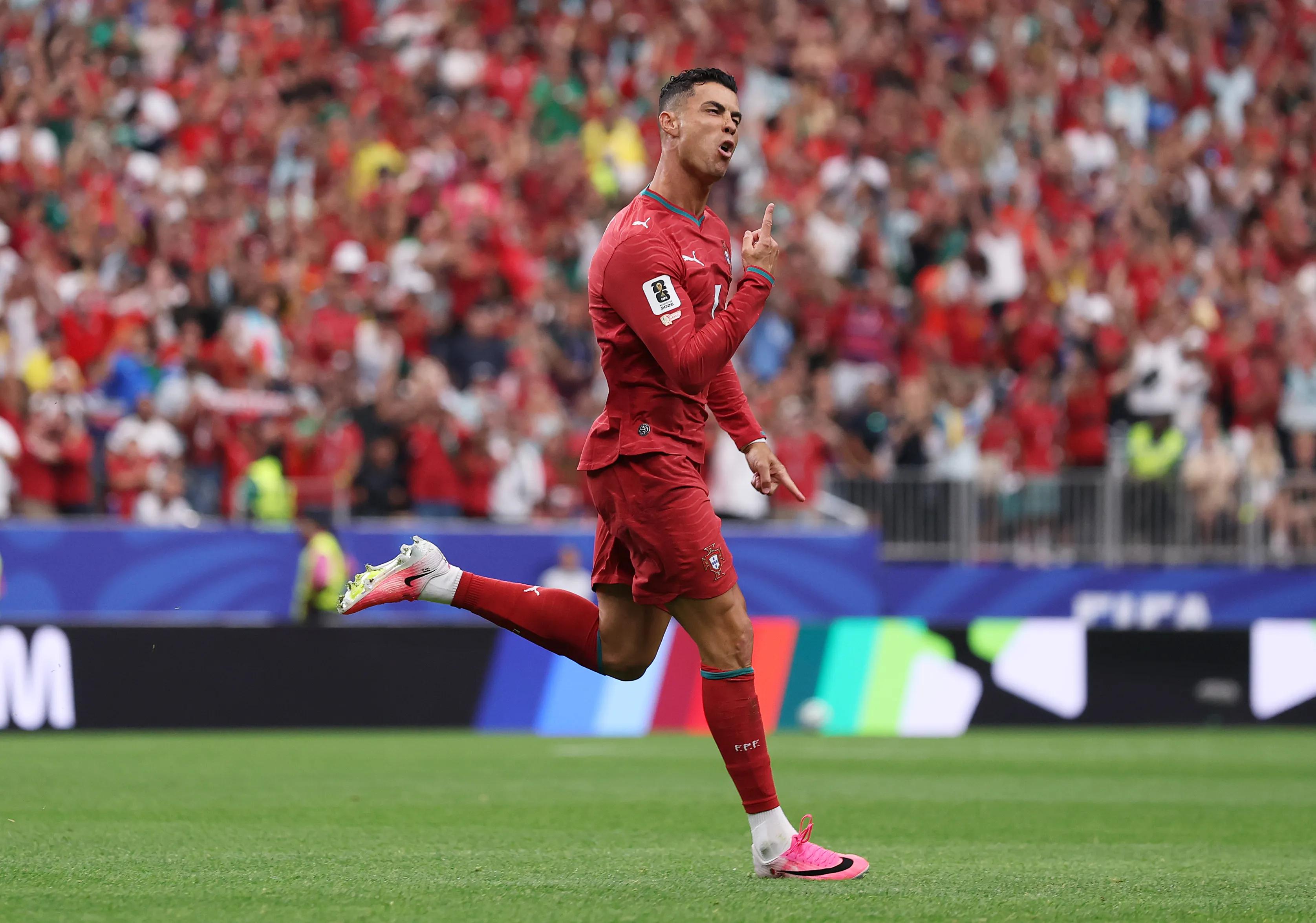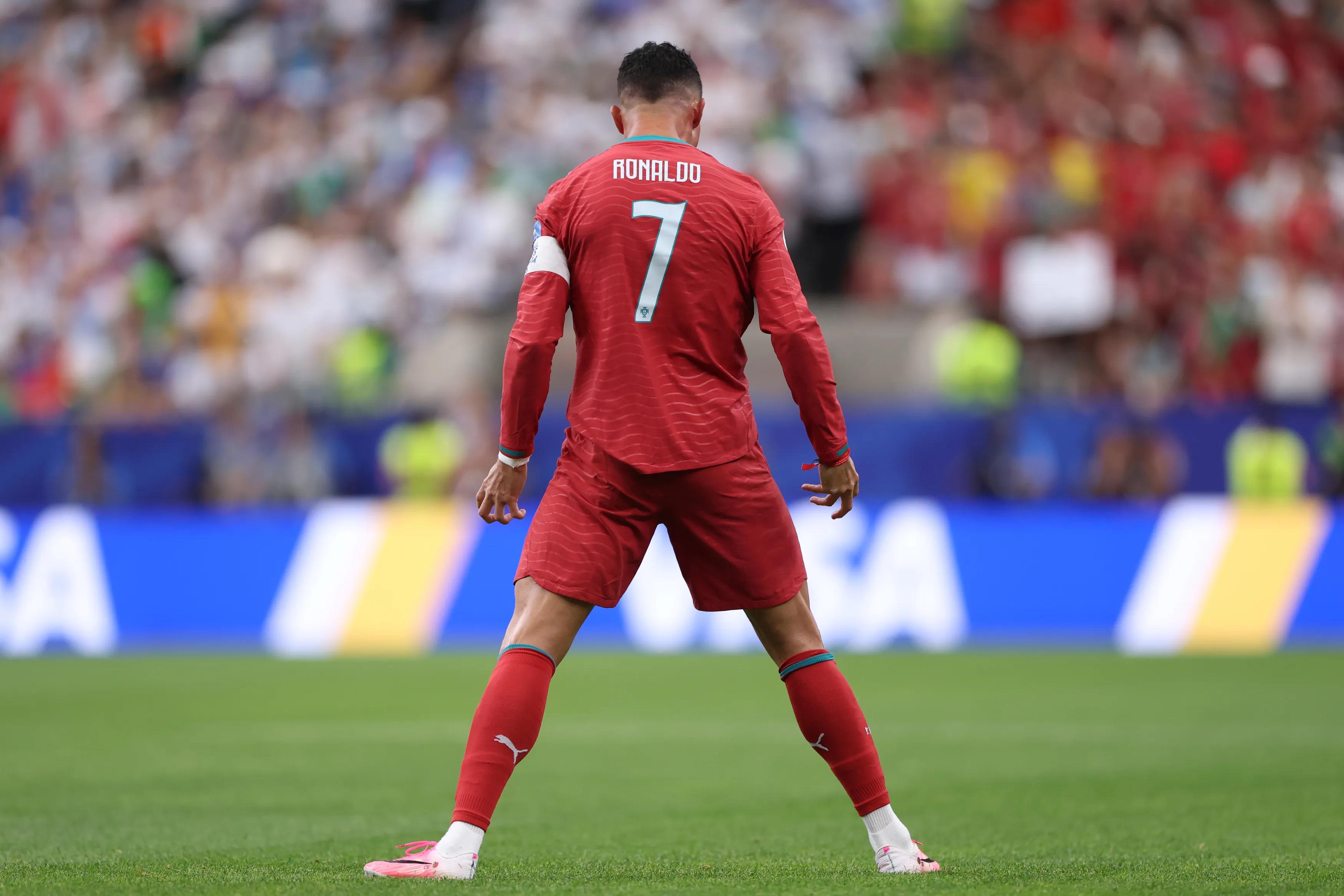
Roberto Martínez arrived at this fixture carrying the most delicate tactical assignment in international football: integrating Cristiano Ronaldo into a system that must also serve a generation of younger attackers. The pre-match board showed a 4-3-3 with Ronaldo as the central striker, but the asymmetry was telling. The left winger was granted freedom to drift inside and combine, while the right winger held width to prevent the defence from collapsing centrally. Behind them, a single pivot screened the back four with two eights shuttling box-to-box. Portugal's pressing scheme was calibrated to protect Ronaldo's reduced mobility. Rather than a high block, Martínez deployed a mid-block press with the wingers curving their runs to force play toward the touchline, where the full-back could trap the opponent. Ronaldo's role was to occupy the deepest defender and cut passing lanes rather than chase — a concession to age that nonetheless preserved his penalty-box threat. The in-game evolution revealed Martínez's true intent. When Uzbekistan compacted the central zones, Portugal shifted to a 3-2-5 in possession, with one full-back tucking inside and the other advancing to create a front five. Ronaldo now operated as a false nine, dropping to link play before spinning in behind. The goal that etched his name into six-World-Cup history came from a rehearsed pattern: a deep build-up switched to the advanced full-back, whose cross found Ronaldo peeling off the far shoulder of the centre-back. The substitutions reinforced the philosophy. Fresh legs on the flanks maintained the pressing intensity Ronaldo could not sustain, while a defensive midfielder's introduction locked the result. For the 2026 tournament spread across North America, Martínez's handling of his legend offers a case study in managing transition-era squads. The balance between reverence and pragmatism, between star power and collective structure, will define Portugal's ceiling on surfaces from Los Angeles to Mexico City.
"Light writes the story"